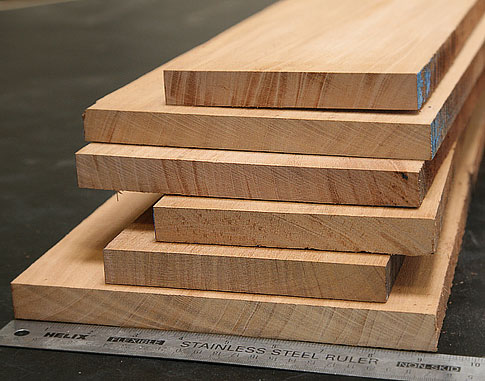
Ash 4/4 Lumber
SKU: ash44$7.99 /Board Feet
Enter the sizes you'd like to end up with and add to cart when ready!
Description
This under appreciated wood needs your attention. You might even mistake ash for oak because it shares a near-identical grain structure. Expect a porous grain with sweeping cathedral pattern and a nice near-white color that's consistent throughout. It's hard and durable - which is why you'll see it used in custom furniture, flooring, baseball bats, and also musical instruments.Specifications
Understanding Lumber Sizes & Ordering
4" to 10"
Lumber is supplied in random widths within this range. You can request minimum widths or add a straight-line rip in the order form.
6' to 12'
This is the range of lengths that we might have in stock. The length you receive depends on how much you order.
13/16"
Also known as 4/4, S2S. Surfaced 2 sides (S2S) from rough sawn lumber. You should be able to yield approximately 3/4" thickness after you flatten, plane, shape or sand your project parts to fit your project
Learn what 4/4, 6/4, 8/4 and other lumber thicknesses meanWe always try to ship the longest lengths possible within standard shipping limits.
Freight shipping is generally most economical for larger orders of approximately 450 lbs or more.
How Lumber Ordering Works
Order in Board Feet.
Project Planner worksheetExtra lumber gives you room for grain and color selection, mistakes, test cuts, and finishing samples.
Use the order form to request width, length, or other size preferences when available.
Wood Species Guide
About Ash
Fraxinus americana Grows in North America

North America
USA, Canada
Compare Ash with
Color Range
Light cream to light brown.
About the Tree
Reaches heights of 70-80 feet with a trunk diameter of 24-36". Boles are often straight and clear of branches for 30-50 feet.
Other Names
American ash, Ash, Biltmore ash, Biltmore white ash, Fresno, White ash
Common Uses
Handles, furniture, cabinets, interior joinery, sports equipment, baseball bats, auto bodies, and some musical instruments.
What Does The Janka Hardness Rating Mean?
The Janka hardness test is the international standard for measuring the resistance of a sample of wood to denting and wear.
It's expressed in psi, or pounds-per-square-inch. The test measures the pressure required to embed an 11.28mm (.444 in) diameter steel ball into wood to half the ball's diameter. The measurement was developed to determine whether a species is suitable for use as flooring; however, we include it here and compare it to the rating of red oak to help you make a buying choice.
There is a difference between hardness and being difficult to work with. Generally speaking, the harder the wood the easier it is to finish and polish. Harder woods create good, solid long-lasting joinery in furniture.
The hardness of wood varies with the direction of the wood grain, and varies from piece to piece. So a Janka rating is an average of numerous tests performed on all directions and numerous pieces. Use the Janka hardness rating as guide, not a definitive answer.
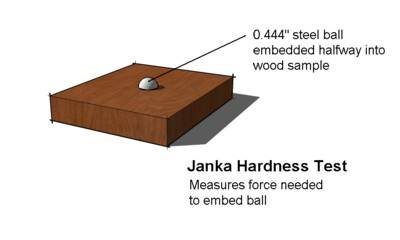
Image by Nasa-verve, Wikimedia Commons
Lumber Help & Tools
Hardwood lumber works a little differently than dimensional lumber from a home center. These tools and guides can help you plan your order with confidence.
Board Foot Calculator
Figure out how much hardwood lumber your project needs.
Open calculatorWhat Is a Board Foot?
Learn how random-width hardwood lumber is measured and sold.
Learn about board feetNeed Certain Sizes?
Use the order form to request minimum widths and lengths. We'll select lumber that can yield the sizes you need.
You will still cut or join the material to create your final dimensions.Hardwood Grades Explained
Learn what Clear One Side, Select & Better, and other lumber grades mean.
Understand lumber gradesProject Planner Worksheet
Estimate your project lumber needs before placing your order.
Download worksheetStill Have a Question?
Our crew can help you figure out quantity, size requests, shipping, or the right lumber for your project.
Use & Care
Solid wood is a natural material that responds to changes in moisture, temperature, and humidity. A little preparation and proper storage will help you get better results from your lumber and wood components.
Let the Wood Acclimate
Allow the wood to adjust to your shop or project environment before final milling, assembly, or finishing. Changes in humidity can cause solid wood to expand or contract.
Store It Flat and Supported
Keep wood dry, protected from direct sunlight, and supported so it cannot sag or twist. Whenever possible, allow air to circulate around the material rather than trapping moisture against one face.
Mill in Stages
For projects that require precise dimensions, remove material gradually and give the wood time to settle between major milling steps. Leave a little extra thickness or width until you are ready for final sizing.
Expect Natural Variation
Color, grain, figure, and texture vary from board to board. Lay out your project parts before cutting so you can make the most of the natural character and arrange grain and color where they look best.
Use Sharp, Appropriate Tools
Sharp blades and cutters generally produce cleaner surfaces and reduce tearout, burning, and unnecessary stress on the wood. Adjust your cutting approach for the grain direction and density of the material.
Test Your Finish First
Sand consistently and test stains, dyes, oils, or other finishes on an offcut or inconspicuous area first. Finish can change the color and contrast of natural wood dramatically.
Helpful Lumber Resources
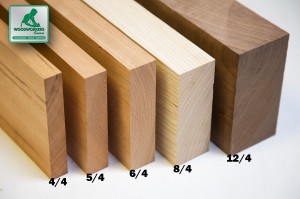
Understanding hardwood lumber starts right here with these wacky fractions.

If you're expecting perfect clear lumber 100% of the time, you're in for a surprise. Here's a summary of the hardwood lumber grades and what to expect from them.
Board feet isn't your everyday kind of math, but these three simple steps make it easy to figure out your project.

Here's a handy (and free) Excel worksheet that helps you estimate the lumber needs for your project.

Are woods poisonous? Hazardous to use in cutting boards or baby cribs? Find out here.

Wood is like a sponge, and it's always in a state of absorbing or releasing moisture to stay equalized with its environment. The problem with that is it also swells and shrinks. Here's what you need to know to protect your project.
Project Inspiration
Lumber Deals & Woodworking Tips
SIGN UP NOW to get a $10 coupon!
Our weekly email newsletter is pretty cool with project pictures made by our customers, woodworking tips, and lumber deals just for our newsletter subscribers.
We'll even give you $10 to use on any purchase of $50 or more at Woodworkers Source.