How to Build a Folding Workshop Table with 3 Tops: Router Table, Down-Draft Sanding Table, General Work Table

by Mark Stephens | April 12th, 2013
All photos use

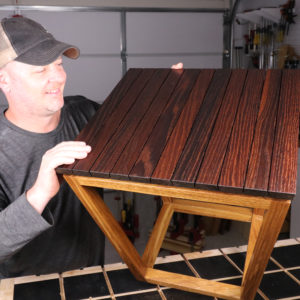
Every month we host a free woodworking demonstration at our stores, and each one is taught by our esteemed demo man, Joe. Due to the nature of his “traveling woodworking show,” he built this fold down table that does a few cool things:

  • Easy to store and set up
  • Sturdy enough for many woodworking operations like routing and assembly
  • Table top changes out for special applications: router table, down-draft sanding table, general purpose work table.

The quick video above shows how it works. Is it a robust workbench? Obviously not. However, it is a handy table that can serve a number of purposes for you in your own shop.

Joe pieced together sketches and a parts/materials list you can download and use for making your own table.

Click here for a link to plans in PDF form.

Three tops you can make:

  • Router table
  • Basic work table
  • Downdraft sanding table

What Does Quarter Sawn and Flat Sawn Mean? What’s the Difference and Why Do I Care?

by Mark Stephens | April 12th, 2013
All photos use

Here’s yet another helpful video by George Vondriska from Woodworkers Guild of America, and in this one he explains how logs are sawn and how different parts of the tree produce different grain patterns. Flat sawn lumber is the most economical way to saw a log and the process produces grain patterns that are wide and cathedral like. Quarter sawn, on the other hand, is more labor intensive and therefore more expensive to buy. Quarter sawn boards have a straight grain pattern, and the lumber is generally more stable than flat sawn. In this video, Vondriska illustrates how this is done by using a slice of a log to show us what’s going on. Enjoy.

How to Make Walnut Woodworking Projects Look Great with Dye & Stain

by Mark Stephens | February 6th, 2013
All photos use

It’s a simple reality that walnut used in woodworking projects has two troublesome traits. First, the natural dark color of walnut will fade over time due to UV light exposure. The process is slow, but it happens. Second, walnut lumber contains some pale sapwood, depending on your tastes, you either like it or not. However, there is a very easy way to make the color last a long time, make the heartwood and sapwood blend, and still maintain a nice, dark, chocolatey walnut color that’ll make your projects look beautiful.

We’ve written up the process on how to do this in 3 Great Ways to Hide Sapwood, but we decided it was time to show how it’s done with a video. The video just shows the process, and that’s where the magic is. It’s not really in the specific brands or products I’ve used here. You can use different colors of dye and stain to come up with a final appearance that suits your taste.

Post your questions at the bottom.

Walnut board dyed and stained

Two walnut boards compared. Bottom is raw, top is dyed, stained, and finished to hide the sapwood. Can you tell where the sapwood and heartwood meet? Look closely, scroll down.

Get a little closer to that finished piece, and you’ll see how well that the sapwood blends right into the dark heartwood while keeping a beautiful dark walnut color:

Walnut wood dyed to blend sapwood and heartwood

Yellow highlighter lines show the delineation between heartwood and sapwood

Oh, Woodworking Is Just A Little Hobby? Try Rebuilding a 1923 Hot Rod

by Mark Stephens | February 2nd, 2013
All photos use

When so many woodworking projects are launched out of a simple needs – like the need for a cabinet in the laundry room  or out of desire to try that neat looking jewelry box you saw in a magazine, or as a response to your grown child’s Big News that you’ll soon be a grandparent and-oh-by-the-way-would-you-build-a-crib – I’m sure we’d all like to take on a project like this.  I’m talking about a project that, if it works out,  goes vrooom-vrooom and would impress the old high school buds.

Richard Todd, a customer to our Tucson store, just spent the last 8 months working on this beauty. He rebuilt the cab out of ash and birch.

The pictures say it so much better, here you go:

Building a Black Credenza

by Keith Stephens | January 4th, 2013
All photos use

This project started with a call from my son, Greg. His girl friend had just moved into a new office and she wanted a book shelf to fit in a niche. Would I help him build it?

The design theme would come from a large picture frame in Katie’s office and there were other requirements:

The inspiration frame

The Inspiration Frame

  •   Match the bevel design of the frame.
  •   The cabinet was to be black
  •   The design had to be symmetrical
  •   Clean, contemporary look
  •   Adjustable feet
  •   The unit had to fit in a recess along one wall


Here is the legal pad sketch and final product.

The Plan

The interior carcase is black melamine. All the exterior is ebonized Cherry, black aniline dye followed with black Master Gel stain.  The door is Macacauba.  Satin lacquer is the final top coat.

 Building the Case

To minize the interior finishing and provide a good wear surface for the shelves, 2 sided black melamine was selected.  Dados or rabbets were cut for all of the mating joints, horizontial and verticle.  A rabbet was cut to provide for a recessed back.Dry fitting the case.


In this dry fit of the case dados for the shelves are visible.


When everything check out the case was clamped and drilled for Confirmat screws.   These screws, specifically for particle board or MDF,  require a step drill but will hold tight and not split the panel.  For this part of the project Titebond Melamine glue was used.

cabinet 2


Finally glued, screwed and clamped.  Notice the 90 degree blocks to bring everything square.


Next step was to attach a Cherry runner to the bottom and 1/4″ Cherry plywood to the exterior of  each side.  The plywood was cut oversized, glued with contact cement and screwed near the top and bottom where the screws would be covered.  A quick pass with a flush trim router bit and the end panels matched the sides perfectly.

cabinet 3

The bottom shelf is about 3″ above the floor.  Now is the time to add the base support.  This required a cleat to provide a place to attach the support.   Here is how that all went together.

The base is strengthened

The base is strengthened

Heavy duty adjustable feet (not shown) were then attached to each corner.  These feet adjust through a hole in the bottom.  The final step when setting the cabinat is to insert a plastic plug into each hole.

The carcase is now complete.

Adding the Details

The face frame includes a wide piece at the base that aligns with the bottom shelf and a 3” wide piece that aligns with the top of the case.   These pieces were cut to size and clamped in place.  The remaining 1-1/2” wide pieces were carefully cut to fit and clamped.

cabinet 6

When everything was properly aligned the faces were taped, labeled and the frame was assembled using a Kreg pocket hole jig.   The tape clearly identified the front of each piece and helped to make sure the right face was drilled.

cabinet 7

Before the frame was attached it was dyed black so we would not have to do any staining of the interior after the cabinet was assembled.  The frame was glued in place and attached with screws through the base support from the inside and pocket screws through the top and shelves.

cabinet 8


The angled clamp in front is correcting an alignment.


After the clamps came off the ends of the frame were flush trimmed and the black dye completed.  At this point the color is more of deep charcoal gray than black.

cabinet 9a


cabinet 10

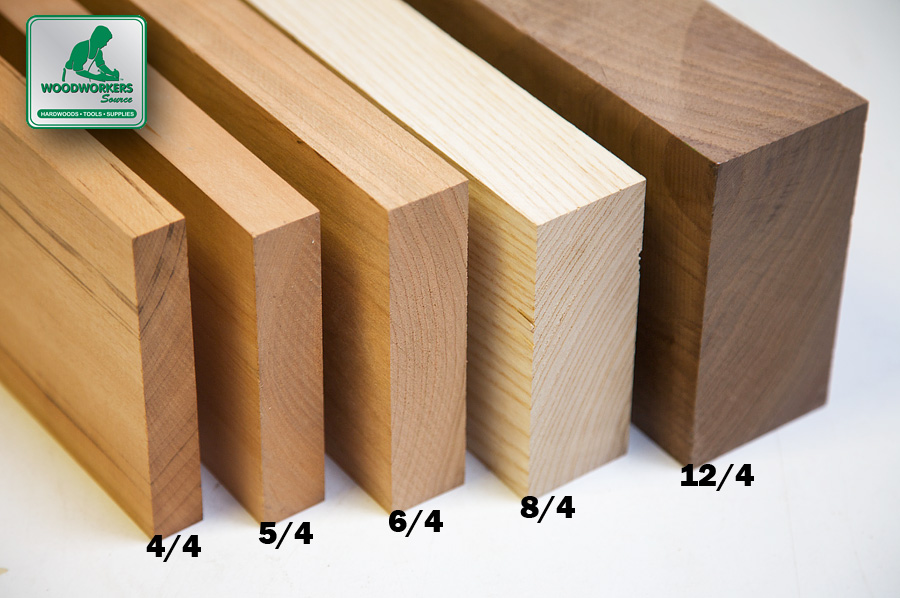
The top is Cherry plywood with the edge overhang    made from 8/4 Cherry planed to 1-5/8.  The molding is attached to a tongue with glue and screws, leaving a  1/8” groove.  Here we are checking the mitre joints and marking the ends to length.

The base molding matches the top, bevel edge and a 1/8” groove.  The center section was drilled for a movable shelf.   Everything dyed, Master Gel applied and ready for lacquer.


cabinet 11a


cabinet 13


Making the Door


Stock for the DoorDespite all of the work building the case for this credenza, the  star  of the show is the single center door.

The wood is Macacauba from north central Brazil.

This is a great cabinet and furniture wood but it is also used for traditional marimba bars.


The door frame was to be beveled so we decided to make it extra thick.  The panel would set proud of the frame.   Straight grain sections were selected for the frame, cut and face glued to create  the thickness.

Door1


A lot of clamps were used to insure a flat piece and a nearly invisible glue line.

For the panel we chose cathedral grain for the center with straight grain on the sides.  This was a simple glue up but it always amazes me how things can go wrong.  To help make sure things went right the blue tape identified the face and grain orientation.

door2

Here are the door pieces partially milled, cut to size with the bevels.

door3

Finally, here is how it went together.  The panel tongue floats in a groove in the frame and was positioned so there is a 1/8” groove all the way around.  To keep everything in place a drop of glue was applied in the center.

door4

When the glue had set the bevels were hand planed, scraped and sanded.  For strength, splines were added to each corner.  One coat of sanding sealer followed with 5 coats of satin lacquer, a little touch up, and the door was ready to be installed.

cabinet 15


Screw on the back, add the adjustable center shelf,  dust  and this project is ready to go home.

cabinet 18

All done, delivered and put to work.

cabinet23 cabinet24


Call us! It's toll free:
800-423-2450

Three stores in Arizona:
Hours: Monday-Saturday 8am-5pm
18115 N. Black Canyon Hwy
Phoenix, AZ 85023
602-504-1931
645 W. Elliot Rd.
Tempe, AZ 85284
480-355-5090
3441 S. Palo Verde
Tucson, AZ 85713
520-745-8301

All Major Credit Cards Accepted:

Home | Shipping | Info | Resources | Large Orders | Privacy Policy
Current Specials | Lumber | Veneer | Turning Stock | Other | Power Equipment | Garage Sale