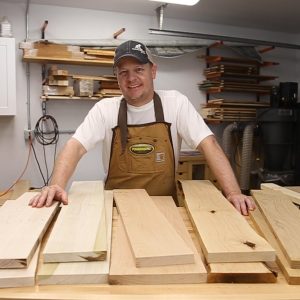
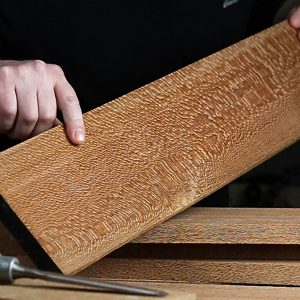

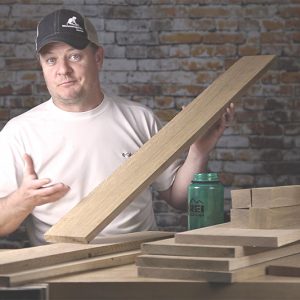
Here’s yet another helpful video by George Vondriska from Woodworkers Guild of America, and in this one he explains how logs are sawn and how different parts of the tree produce different grain patterns. Flat sawn lumber is the most economical way to saw a log and the process produces grain patterns that are wide and cathedral like. Quarter sawn, on the other hand, is more labor intensive and therefore more expensive to buy. Quarter sawn boards have a straight grain pattern, and the lumber is generally more stable than flat sawn. In this video, Vondriska illustrates how this is done by using a slice of a log to show us what’s going on. Enjoy.
Posts Tagged ‘help’
What Does Quarter Sawn and Flat Sawn Mean? What’s the Difference and Why Do I Care?
Friday, April 12th, 2013How to Make Walnut Woodworking Projects Look Great with Dye & Stain
Wednesday, February 6th, 2013It’s a simple reality that walnut used in woodworking projects has two troublesome traits. First, the natural dark color of walnut will fade over time due to UV light exposure. The process is slow, but it happens. Second, walnut lumber contains some pale sapwood, depending on your tastes, you either like it or not. However, there is a very easy way to make the color last a long time, make the heartwood and sapwood blend, and still maintain a nice, dark, chocolatey walnut color that’ll make your projects look beautiful.
We’ve written up the process on how to do this in 3 Great Ways to Hide Sapwood, but we decided it was time to show how it’s done with a video. The video just shows the process, and that’s where the magic is. It’s not really in the specific brands or products I’ve used here. You can use different colors of dye and stain to come up with a final appearance that suits your taste.
Post your questions at the bottom.

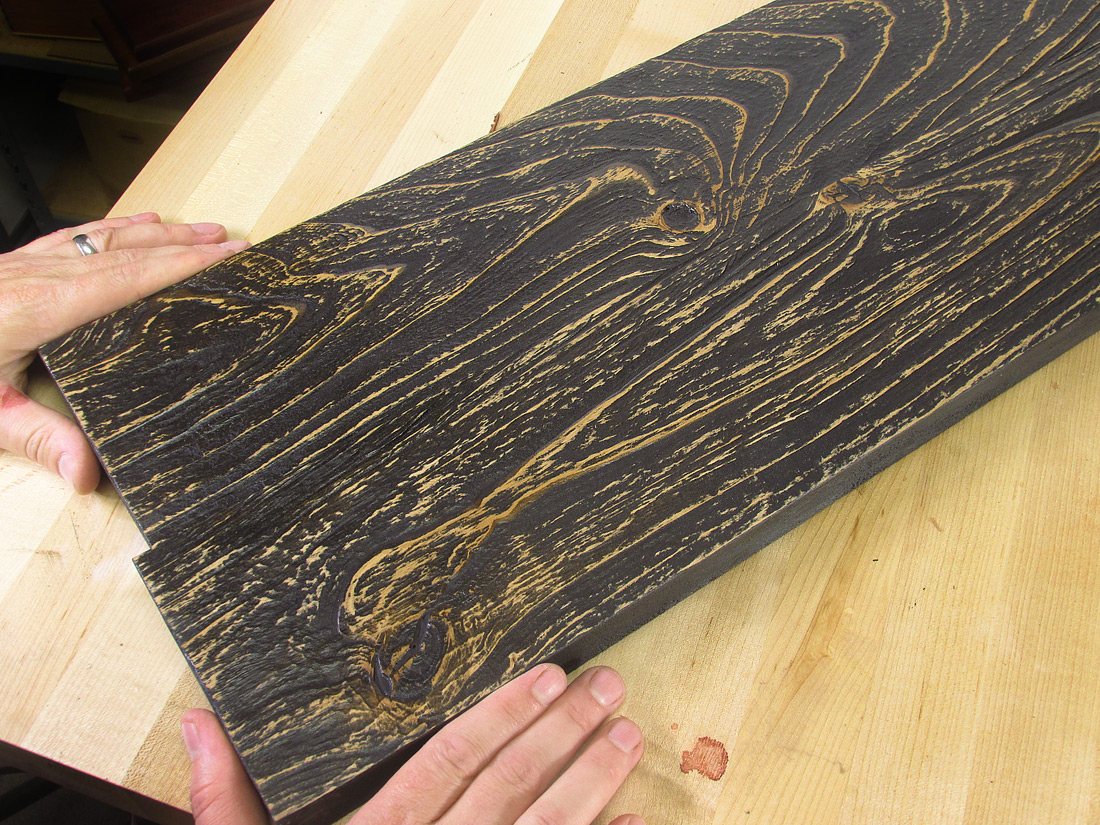
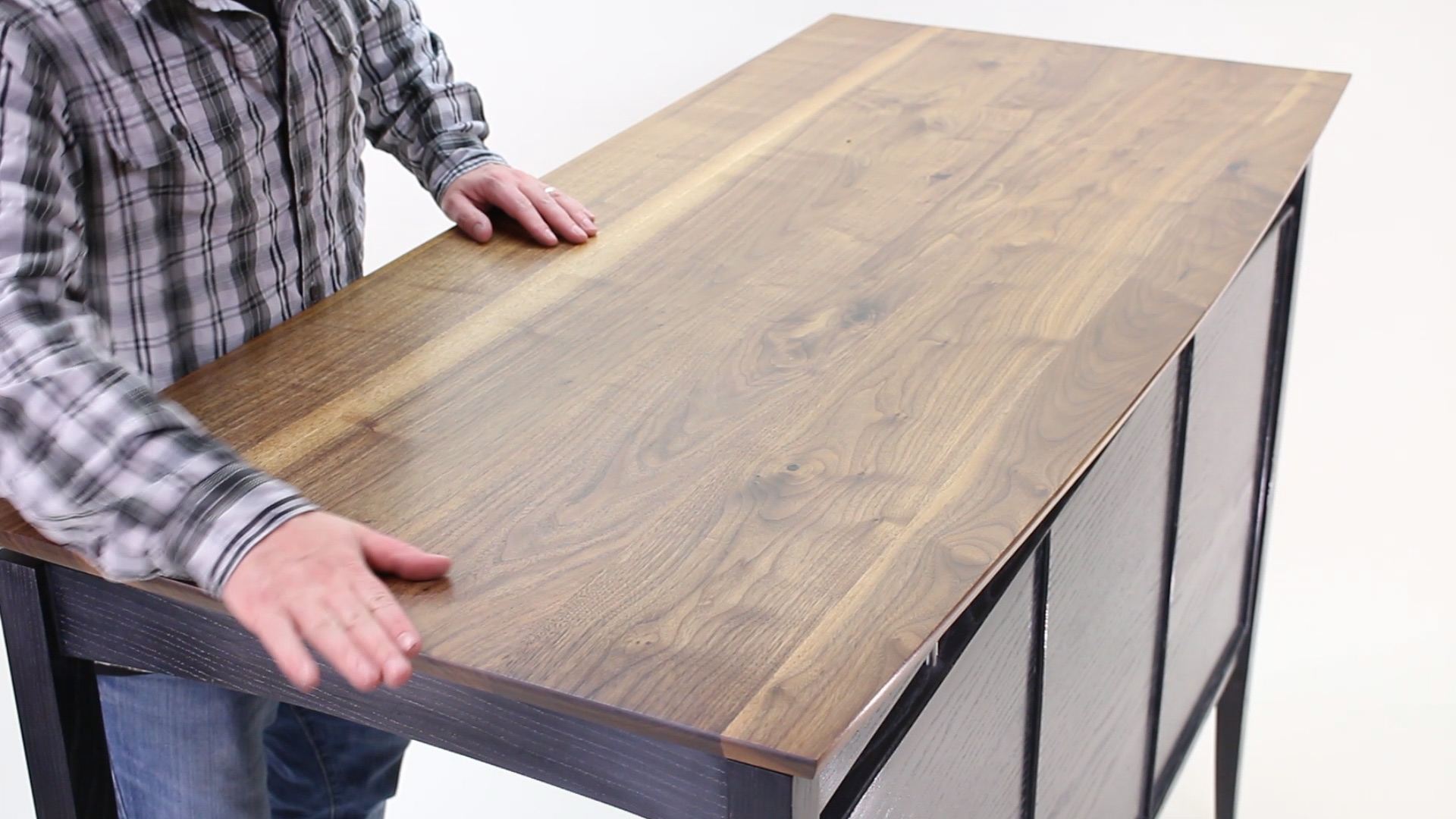
Two walnut boards compared. Bottom is raw, top is dyed, stained, and finished to hide the sapwood. Can you tell where the sapwood and heartwood meet? Look closely, scroll down.
Get a little closer to that finished piece, and you’ll see how well that the sapwood blends right into the dark heartwood while keeping a beautiful dark walnut color:
How To Improve Your Solid Panel Glue Ups
Tuesday, October 23rd, 2012
Gluing up boards to make solid cabinet doors and table tops remains a necessary and time-consuming part of woodworking. And many woodworkers out there avoid glue-ups because of the machinery (or exhausting hand work) required to get a newly glued-up solid wood panel nice and flat. It takes a wide planer, wide sander, or unyielding enthusiasm for the joys of hand planing.
But here’s a little trick that’ll help out: clamp blocks that help keep the aligned and flat while the glue dries.
Make blocks out of solid 3/4″ material that resemble a 4″ long U shape. See below. Clamp up your panel with bar clamps or pipe clamps as you normally would. Then clamp U blocks so that they bridge over the joints, achieving two things:
- Forcing the boards to align perfectly giving you a smooth panel
- Keeping the blocks from becoming glued to the workpiece
In the end, you won’t need to do nearly as much planing and sanding to get the solid panel flat.
WOOD Magazine has free plans for the clamp blocks at this page if you need a visual:
http://www.woodmagazine.com/woodworking-plans/clamping/easy-to-handle-clamp-blocks/
3 Great Ways to Hide Sapwood in Walnut
Thursday, March 29th, 2012
Look close. This piece of walnut is not only finished with a clear lacquer but the light colored sapwood has been evened out to nearly match the heartwood. Woodworking with walnut today means dealing with the sapwood. Here are 3 ways.
Few people approve of pale sapwood in their walnut lumber, but in the words of Jim, a salesman at one of our faithful walnut suppliers back east, “When people ask me for a 100% heartwood face in walnut, I just tell them they’re dreaming.” You may be tired of hearing that sapwood isn’t considered a defect when it comes to grading lumber, however it is an industry fact. Lumber grade is a mathematical computation of the amount of clear wood in a board – so says the National Hardwood Lumber Association, the organization responsible for defining the rules of the lumber trade.
“But it’s a defect to me,” says the woodworker.
So what’s a woodworker to do? Fortunately, lumber producers separate their walnut inventory not just by grade but also by color. The good news is 100% heartwood walnut can be had; the bad news is few can afford it. For the most part, about the best balance between color, cost, availability is called 90/70 heart: that means 90% heartwood on the face, 70% heartwood on the back. Remember, lumber has two broad sides, a face and a back, and when building furniture and cabinetry, only one side is displayed in the final product.
Sure, it’s possible to find some 100% heartwood boards from time to time, but on a consistent basis and in large quantities? Not really. And therefore, when you visit your nearest lumber supplier, you’ll never have a perfect pile of full brown walnut to select from. Full heartwood boards are the exception to the rule, so it’s time to look at how woodworkers are using walnut in today’s woodworking.
You’ll find a number of discussions and blogs about this topic, and a good one in particular is this found at Lumber Jocks, www.lumberjocks.com/topics/10565, which discusses three ways woodworkers overcome sapwood.
3 Ways to Deal with Sapwood in Walnut:
- Cut sapwood off, and/or hide the sapwood on parts that will not be seen frequently
- Live with sapwood in your finished project
- Use a dyeing and staining process to make the color even
Those first two are straightforward.
Dyeing and staining needs some explanation, though. Since you’re not going to be able to go the woodworking store and buy a bottle of Sapwood Hider right off the shelf – alas, no such miracle exists – there are a couple of steps involved, but they’re easy.

Walnut board clearly shows a sapwood edge until the piece is dyed, sealed, stained, and finished. A saw kerf line separates the two sections.
For this method, we’re specifically talking about dye and there are a number of dyes on the market, usually mixed with water or denatured alcohol. Dye is different from stain, as dye doesn’t obscure the grain, which is pretty important when using walnut.
The basics:
1. Apply a very diluted dye in a color of your choice to the entire piece, heartwood and sapwood. The dye used in the pictures here is Behlen Solar-Lux™ medium brown walnut color. Solar-Lux™ is UV resistant and fade resistant, which is great because when walnut is left natural, it eventually turns very tan. Walnut ought to be dyed or stained anyway to retain a pleasing color. Note: Medium brown walnut Solar-Lux™ dye will appear orange when you apply it, but that’s okay. The next steps will bring the color back to dark brown.
2. Seal the wood with a light coat of sanding sealer or shellac. This needs to be thin to allow for the next step to have some effect.
3. Apply an oil-based stain on top of the sealer. Wipe it on, wipe it off. This adds a touch of pigment to the pores equally to you get a consistent color across the board.
4. Apply your clear finish of choice. Varnish, lacquer, etc.
It should go without saying that you should always test your dye process on a few test pieces before committing the dye to your final product. You’ll need to test different dilution ratios of your dye before you get the color you want.
Dyeing walnut is not very difficult, but it will take some time. However, you’ll greatly increase your yield of wood and you’ll make the beautiful walnut color last much, much longer than you would if if were to leave the wood natural.

This part of the board is finished with just a clear coat of Zinsser Sealcoat and lacquer. The sapwood strip stands out. Eventually the color of this board will lighten.
Did You Know About Lumber Discounts?
Thursday, September 8th, 2011
When you’re out to buy lumber, we want you buy from us. No surprise there, right? Most importantly, that’s why we try to provide you with a whole menu of choices so you can buy wood that meets your needs. If you want to buy just a small piece of something exotic, no problem. We’ll cut a piece for you from a longer board. That’s also known as “no minimum order.” Get as little as you want.
Or if you need to yield a certain size in your project, no problem. We ask you for selection requirements when you order over the phone or through our website.
If you don’t want to even think about shipping costs, we have lumber packs in 3 different quantities that are priced with shipping included so you know right up front what your exact out-of-pocket cost is. You can see those right here: Lumber Packs, shipping included.
Then if you want a lower price, guess what? I have an answer for that too.
Woodworkers Source Lumber Discounts:
- Lumber – buy 100, get 25% discount. Yes, you can mix or match woods. Get 20 of this, 20 of that, 60 of that and you’ll get 25% off each one. Exception is when the lumber is on sale. See below.
- Craft and Project packs – buy any 3, get 10% off each one. Again, yes, you can mix and match. Get a pack of one wood , then two packs of another, you’ll get 10% off each one. Go to packs >>>
- Lumber that’s on sale – only difference is the discount. Buy 100, get additional 10% discount off the sale price. Woods that are on sale can always be found on the Current Specials page.
Veneer & Turning Stock Discounts:
- Veneer – buy any 5 sheets, get 10% discount. Yes, you can mix or match as well. Go to veneer >>>
- Turning Stock – buy any 5 blanks, get 10% discount. Yes, you can mix or match as well. Go to turning stock >>>


